

Last Updated: October 25, 2026
Quick Summary
Indoor vs outdoor archery serve different training needs: indoor practice emphasizes repeatable conditions and consistent form development, while outdoor archery exposes you to varied distances and environmental variables like wind and changing light. Beginners benefit from indoor consistency to build foundational form, while competitive archers and bowhunters need outdoor exposure to prepare for real-world conditions.
- Indoor ranges typically support distances up to 20-30 yards, while outdoor ranges extend to 70 meters, making outdoor practice essential for bowhunting and tournament preparation.
- Most serious archers use both environments deliberately: indoor sessions maintain form during bad weather, while outdoor sessions replicate competition or hunting conditions.
- Start indoors or at short outdoor distances for the first 4-6 weeks, then add outdoor sessions once your 20-yard group stays inside a 6-inch circle.
- Distance determines what skills you train: 10-20 yards builds form, 20-30 yards develops aiming, 30-40 yards trains mid-range precision, and 60+ yards replicates tournament distances.
- Use indoor sessions to build and maintain form, and outdoor sessions to test that form under real conditions like wind and variable lighting.
Table of Contents
- Indoor vs Outdoor Archery Practice: The Core Differences
- What Makes an Indoor Archery Range Right for You
- Advantages of an Outdoor Archery Range for Skill Building
- Archery Practice Distance: How Range Affects Your Training
- Setting Up Backyard Archery Practice Safely and Effectively
- Choosing Your Practice Setting by Experience Level and Goals
- Plan Your First Session at Central Florida Archery
- Frequently Asked Questions
Indoor vs Outdoor Archery Practice: The Core Differences
Choosing between indoor vs outdoor archery shapes your shot consistency, skill development, and progress.
Indoor and outdoor practice serve fundamentally different training needs. Indoor archery emphasizes repeatable conditions, consistent lighting, stable temperatures, controlled distances.
Outdoor archery, by contrast, exposes you to varied distances and environmental variables. Longer distances demand different technique adjustments. World Archery's comparison of indoor and outdoor competition notes that outdoor rounds involve multiple distances, creating a more intellectually demanding and stimulating experience than fixed indoor shooting.
The real question isn't which is better, it's which fits your current goal. Beginners building foundational form benefit from indoor consistency; competitive archers preparing for outdoor tournaments need outdoor exposure.
What Makes an Indoor Archery Range Right for You
Indoor ranges eliminate environmental noise, so you focus purely on shot execution and form.
The trade-off: indoor ranges typically support shorter distances.
Space requirements are modest: indoor ranges fit into warehouses, gyms, or dedicated facilities, often stacking multiple lanes into compact footprints.
You can explore beginner archery equipment setup guide to understand what gear works best for indoor shooting environments.
Advantages of an Outdoor Archery Range for Skill Building
Outdoor archery demands adaptation. Wind requires adjustment. Distance requires different technique.
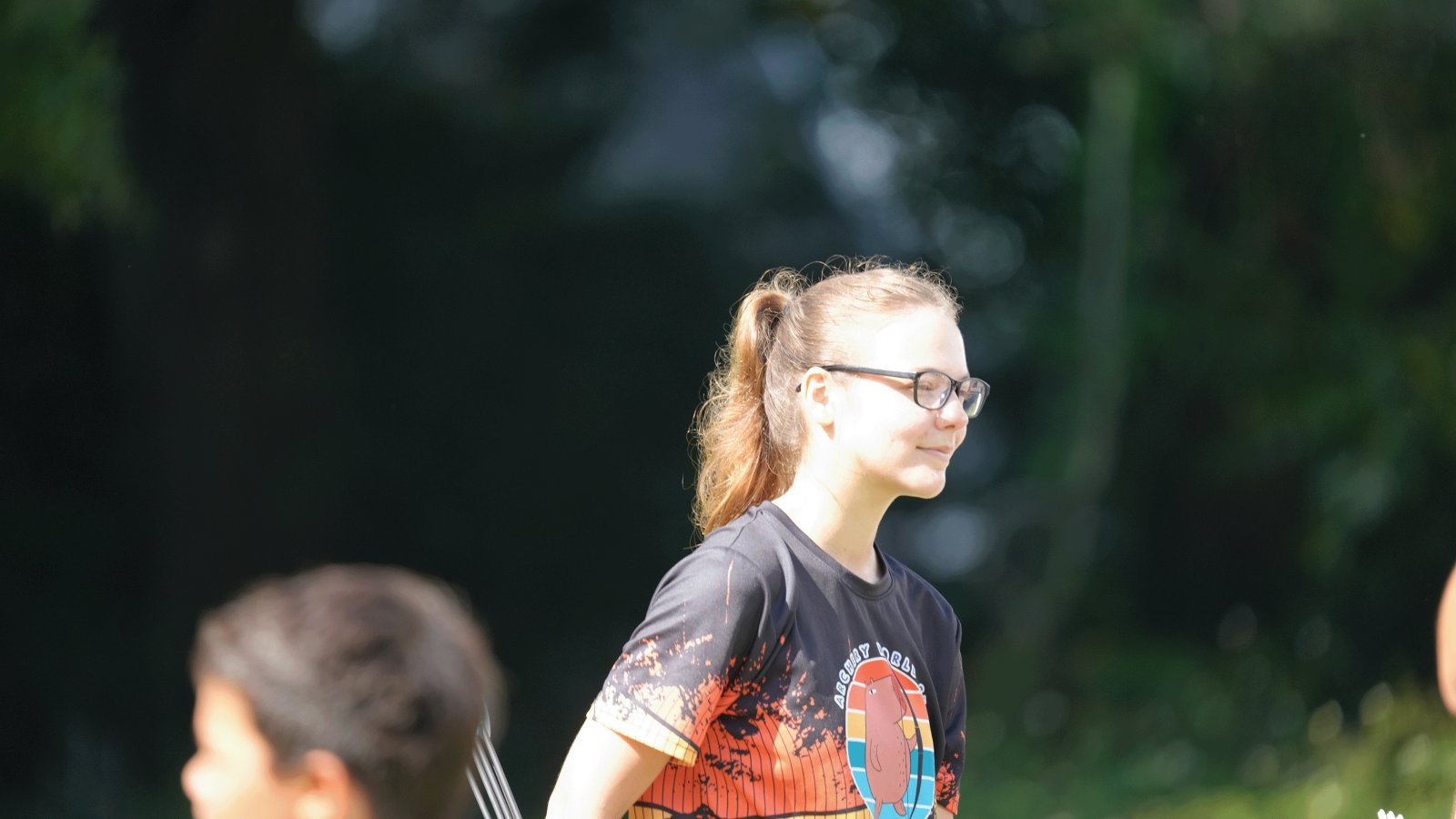
Outdoor ranges develop the skills that matter in real-world shooting. Bowhunting happens outdoors. Field archery happens outdoors.
Central Florida Archery operates a 20-target outdoor range supporting distances up to 70 meters.
Outdoor practice also teaches mental resilience. You can't blame wind or sun for a bad shot; you adjust technique or mindset.
Archery Practice Distance: How Range Affects Your Training
Distance is the single variable that changes what a practice session trains. At 20 yards, a two-inch form error might still land in the 9-ring; at 50 yards, it can push the arrow into the 6-ring or off the bale.
Distances and what they train
- 10-20 yards, form and shot execution. Build repeatable stance, grip, anchor, and release. Arrow drop is minimal, so a bad shot is almost always a form problem. Most indoor leagues and many youth programs shoot at 18 meters (about 19.7 yards), which is why indoor ranges cluster around this distance.
- 20-30 yards, aiming and sight setup. Begin meaningful sight marks here, and group size becomes a reliable progress measure. This is also the practical ceiling for most indoor facilities.
- 30-40 yards, mid-range precision. Wind starts to matter, the sight picture changes, and you practice the distances most bowhunters actually shoot. A common rule of thumb is to practice out to at least the farthest distance you would ethically take a shot, often cited as 40 yards.
- 40-60 yards, precision and mental focus. Small errors compound visibly. This distance separates competitive archers and serious hunters, and arrow spine and fletching choices start to show up in group shape.
A practical distance progression
A common coaching pattern is to warm up short, confirm form, then extend. One workable session structure:
- 10-15 arrows at 20 yards to check anchor and release. If your group is scattered, stop and fix form before moving back.
- 10-15 arrows at your current "working distance", the farthest distance where you keep a consistent group. Most of your practice volume should live here.
- 5-10 arrows at a stretch distance 10 yards beyond your working distance. Expect a larger group; the goal is to learn the sight picture and wind read, not to score.
- 5 arrows back at 20 yards to finish with clean execution and rebuild confidence.
Indoor versus outdoor distance ceilings
Indoor ranges typically max out at 20 yards, some at 30.
The practical takeaway: use indoor distance for repetition and form, outdoor distance for adaptation and precision. The two are not interchangeable, and ignoring one leaves a gap in your skill set.
Different distances train different skills, and understanding what each distance band develops helps you structure productive practice sessions.
Distances |
Primary Focus |
Key Training Outcome |
|---|---|---|
10-20 yards |
Form and shot execution |
Build repeatable stance, grip, anchor, and release |
20-30 yards |
Aiming and sight setup |
Begin meaningful sight marks and measure group size |
30-40 yards |
Mid-range precision |
Practice distances most bowhunters actually shoot |
40-60 yards |
Precision and mental focus |
Small errors compound visibly; separates competitive archers |
60+ yards |
Tournament and field archery |
Replicate outdoor competitive rounds and field courses |
Setting Up Backyard Archery Practice Safely and Effectively
Home practice offers convenience, privacy, and control of your environment, but backyard archery requires careful planning around safety and space.
Space and Safety Requirements
Backyard archery demands a dedicated, isolated practice area with a clear sight line downrange and no people, animals, or structures in the arrow's path. A missed shot or deflection can cause serious injury.
Your backstop must stop arrows reliably. Foam blocks, hay bales, or commercial target systems all work, but arrows must not pass through or ricochet past it.
1-Inch and 3-Inch Variety 12-Pack of TargetTacks® →
Lighting matters for safety and accuracy.
Target Setup and Equipment for Home Practice
A standard paper target pinned to a foam backing works well.
A stationary floor quiver like the Lancaster Archery Supply Range Floor Quiver keeps arrows organized and accessible.

Wear eye protection during arrow retrieval; arrows sometimes glance off the backstop at unexpected angles.
Home practice works best for form drills and short-distance accuracy. It's less ideal for long-distance or high-volume shooting because space constraints limit your options, but for 2-3 focused sessions per week, a backyard range delivers real results.
Choosing Your Practice Setting by Experience Level and Goals
Beginners should start indoors and competitors should shoot outdoors, true but incomplete. The more useful question: given your skill level and goal, what mix of indoor and outdoor practice should you do this month, and when should it change? Here is a framework you can apply.
The decision framework
Ask yourself three questions:
- What is my primary goal right now? Form, score, hunting readiness, or recreation.
- What is my current consistency? Can you keep a fist-sized group at 20 yards, or are arrows scattered across the bale?
- What is my access? Do you have an indoor range nearby, an outdoor range, or both?
The answers point to a starting mix. The mix should shift as your consistency improves and your goal changes.
By experience level
Complete beginner (first 4-6 weeks). Start indoors or at short outdoor distances, prioritizing repetition over environment. Build stance, anchor, and release without wind or glare distracting you. A common pattern is two to three short sessions per week at 10-20 yards. Use an indoor range if available; otherwise a safe backyard setup at short distance works.
Developing archer (2-6 months in). Add outdoor sessions once your 20-yard group is consistent, usually when most arrows stay inside a 6-inch circle across multiple sessions. Outdoor practice at 30-40 yards then exposes form flaws indoor shooting hides, and that exposure is the point. A balanced week: two indoor sessions for form, one outdoor for distance and conditions.
Intermediate to advanced. Most serious archers at this stage use both environments deliberately. Indoor sessions maintain form and consistency during bad weather or the off-season. Outdoor sessions replicate competition or hunting conditions. The ratio should follow your calendar: more indoor in winter, more outdoor in the weeks before a tournament or hunting season.
By goal
Competitive target archer. Indoor and outdoor competition are different disciplines. Indoor rounds are typically shot at 18 meters; outdoor rounds include 50, 60, and 70 meters.
Bowhunter. Your practice must resemble your hunt: outdoor practice at the distances you will actually shoot, typically 20-40 yards, in wind and varied light.
Recreational archer. Choose based on convenience and enjoyment. Indoor ranges offer year-round access and consistent conditions. Outdoor ranges offer variety and challenge.
When to combine both
The strongest training plans combine both environments on purpose rather than defaulting to one. A simple rule: use indoor sessions to build and maintain form, and use outdoor sessions to test that form under real conditions. If your outdoor groups are consistently larger than your indoor groups at the same distance, your form is not yet holding up under variable conditions, and you should spend more time outdoors until it does.
Coach Kim Recurve Shot Trainer helps archers at any experience level improve their shot technique, whether you're practicing indoors or outdoors. The training principles remain consistent, the environment just changes how you apply them.
Plan Your First Session at Central Florida Archery
Starting archery is easier with expert guidance.
Your first session introduces you to proper stance, grip, and release. We cover safety fundamentals, how to handle your bow, how to retrieve arrows, how to respect the range.
If you're deciding between indoor and outdoor practice, our outdoor range gives you both options.
Book a personal coaching session and let's get you started on the right foundation.
Frequently Asked Questions
What are the main differences between indoor and outdoor archery practice?
Indoor archery practice offers consistent lighting, stable temperatures, and no wind, making it ideal for building repeatable form. Outdoor archery practice exposes you to varying distances, weather conditions, and natural light, which better simulates real-world shooting scenarios. Indoor ranges work well for accuracy drills and controlled skill development, while outdoor ranges prepare you for the variables you'll face in hunting or field competition.
Is indoor or outdoor archery practice better for beginners?
Beginners benefit most from starting indoors. The controlled environment at an indoor archery range removes distractions like wind and sunlight changes, allowing you to focus on learning proper shooting form and aiming technique. Once you've built consistency indoors, outdoor archery practice introduces the environmental challenges that will strengthen your adaptability and decision-making as an archer.
Can I practice archery in the backyard?
Yes, backyard archery practice is possible with proper safety measures. You'll need adequate space (at least 40 yards minimum for most bows), a safe backstop to catch arrows, and clear sightlines free of people, pets, or structures. Use the Lancaster Archery Supply Range Floor Quiver ($29.99) to organize arrows safely, and secure your targets with TargetTacks to prevent movement. Always verify local zoning laws before setting up a home range.
How does wind affect outdoor archery practice?
Wind is one of the biggest variables in outdoor archery practice. Even light wind can push arrows off target, and stronger gusts can significantly alter arrow flight. Outdoor practice teaches you to read wind conditions and adjust your aim accordingly. This skill is essential for bowhunters and field archers. Indoor ranges eliminate wind entirely, so outdoor practice is the only way to develop this critical adaptation skill.
The choice between indoor and outdoor archery practice isn't binary, it's sequential. Most archers benefit from starting indoors, building solid form, then adding outdoor practice as their skills develop. Central Florida Archery supports both approaches with expert coaching, professional equipment services, and a community of archers committed to real improvement. Start where it makes sense for you, and we'll help you progress from there.
