

Table of Contents
- Why Bow Tuning Services Matter for Hunters
- What Professional Bow Tuning Services Include
- How to Paper Tune a Bow: The Foundation
- Essential Bow Tuning Tools for Hunters
- Bow Tuning Checklist for Hunting Season
- Preparing for Your Bow Tuning Appointment
- DIY Tuning vs. Professional Services: Which Is Right for You
- Conclusion
- Frequently Asked Questions
Last Updated: October 21, 2026
Why Bow Tuning Services Matter for Hunters
A bow that's not properly tuned won't shoot where you aim. Broadheads fly differently than field points, arrow flight becomes unpredictable, and your hunting season can be over before it starts. Bow tuning services ensure your equipment performs exactly as it should when it matters most.
At Central Florida Archery, we work with hunters who've spent months preparing for opening day only to discover their bow needs adjustment. The difference between a tuned and untuned bow shows up downrange. Proper tuning delivers consistent arrow flight, tighter groupings, and the confidence you need in the field.
Professional bow tuning services address the core issues that DIY attempts often miss: cam timing on compound bows, paper tuning for arrow flight verification, broadhead alignment, and draw-weight optimization for hunting conditions. These aren't cosmetic adjustments. They're the foundation of accurate, ethical hunting.
What Professional Bow Tuning Services Include
Professional bow tuning services go far beyond a quick inspection. They involve systematic measurement, adjustment, and verification to ensure every component works together.
Compound Bow Setup and Adjustment
Compound bows require precision tuning that addresses multiple mechanical systems. A professional compound bow setup includes cam timing verification, draw-weight adjustment, and limb alignment checks.
Cam timing is critical. When your cams aren't synchronized, your bow won't shoot straight. The Precision Archery Tuning Tool ($20.00) allows technicians to verify cam timing in seconds by checking alignment with the string. Misaligned cams lead to left-right misses that paper tuning will immediately reveal.

Draw-weight adjustment matters for hunting. Too heavy and you fatigue during practice, leading to inconsistent form. Too light and your arrow loses velocity and energy transfer to the animal. A professional technician adjusts your draw weight to match your strength and hunting style.
The Bow Press Draw Board Set ($254.00) is essential for DIY tuning or professional shops. It lets technicians check bow timing, cam synchronization, and draw length without guesswork. The included draw-length tape measure eliminates math errors that throw off your entire setup.
Recurve and Crossbow Tuning
Recurve bows need different approaches than compounds. Recurve tuning focuses on nocking point placement, arrow rest alignment, and string consistency.
For recurve shooters, the King Stringer ($9.99) is essential maintenance. It prevents limb twist during stringing, which keeps your bow aligned over time. Proper stringing technique directly affects tuning stability.
String nocking points create consistent arrow alignment. The String Nocks 5-Pack ($2.99) ensures your arrow sits in the same position every time. Inconsistent nocking points cause vertical stringing, which no amount of other tuning will fix.
How to Paper Tune a Bow: The Foundation
Paper tuning is the most revealing tuning method available. You shoot through paper with field points, and the tear pattern tells you exactly what your bow is doing.
The process is straightforward: set up a frame with paper 8-10 feet from your bow, shoot a field point through it, and examine the tear. The tear pattern shows whether your arrow is flying straight or tilted. A perfect tear is bullet-shaped. Any other pattern indicates a tuning problem.
A tear with the nock high means your nocking point is too high. A tear with the fletching angled left or right means your arrow rest needs adjustment. Tears that show the arrow diving or climbing indicate draw-weight or form issues.
Paper tuning reveals problems that target shooting hides. You might shoot a tight group at 20 yards with a poorly tuned bow, but that same bow will spray arrows at 40 yards. Paper tuning catches these issues immediately.
The Pro Bow Square ($15.99) is essential for measuring nocking point height and arrow rest position accurately. The CARBON T-GAUGE BOW SQUARE ($44.99) provides even more precision if you're tuning multiple bows or want measurements that won't shift over time.

Essential Bow Tuning Tools for Hunters
Professional-grade tuning requires specific tools. These aren't luxury items, they're the difference between guessing and knowing.
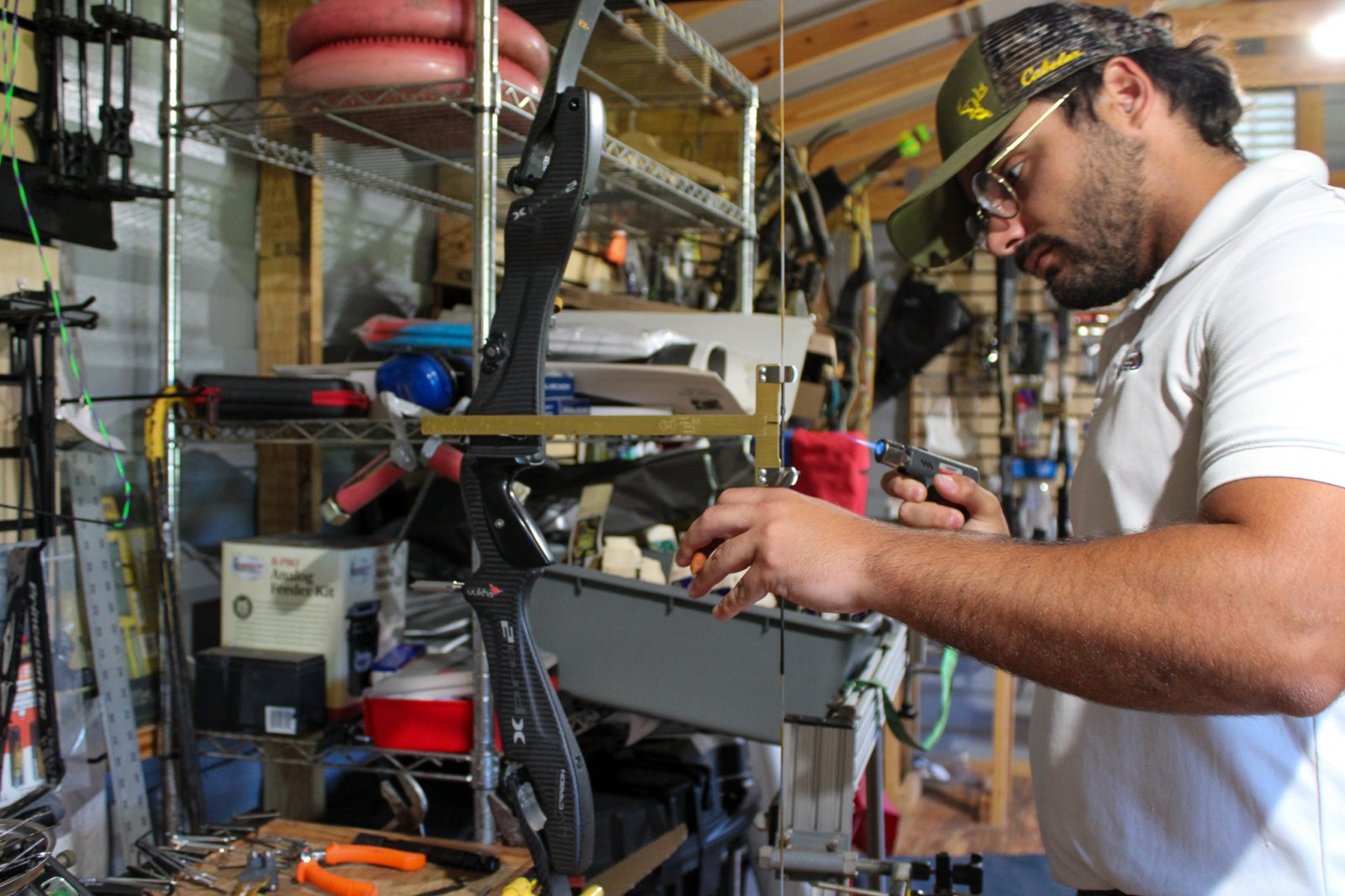
Bow squares measure nocking point height and arrow rest position. The Pro Bow Square ($15.99) includes metal clips for secure placement and works for most bows.
For compound bow owners, the Precision Archery Tuning Tool ($20.00) is purpose-built. It checks cam timing and wheel alignment on Genesis Original bows, eliminating the trial-and-error that wastes time.
The Bow Press Draw Board Set ($254.00) is the investment piece. If you tune regularly or manage a team, this tool pays for itself in time saved. It checks timing, cam sync, and draw length without math.

Arrow building requires quality shafts. King Shafts, Cedar Premium Shafting ($54.99 to $64.99) provides electronically spined, weight-matched arrows. Traditional cedar arrows fly consistently and are ideal for hunting where reliability matters.
Bowstring maintenance prevents tuning drift. The D97 Hunting Bowstring ($39.99) is handmade with optional beaver silencers that reduce noise by 2-3 FPS, useful for hunting where stealth matters.
Precision Archery Tuning Tool →
Tool |
Purpose |
Best For |
|---|---|---|
Pro Bow Square |
Measure nocking point and arrow rest |
Basic tuning |
CARBON T-GAUGE BOW SQUARE |
Precision measurements with durability |
Multiple bows |
Precision Archery Tuning Tool |
Verify cam timing instantly |
Genesis bows |
Bow Press Draw Board Set |
Check timing, cam sync, draw length |
Serious DIY tuners |
King Shafts |
Quality arrow building |
Hunting arrows |
D97 Hunting Bowstring |
Reliable performance with quiet option |
Hunting |
King Stringer |
Safe stringing and alignment |
Maintenance |
Bow Tuning Checklist for Hunting Season
Use this checklist 2-3 weeks before hunting season. It covers the critical tuning steps that separate prepared hunters from unprepared ones.
- Paper tune your bow, Shoot through paper at 8-10 feet and examine the tear pattern. Adjust nocking point or arrow rest until the tear is bullet-shaped.
- Verify draw weight, Check that your draw weight matches your strength. You should be able to draw smoothly without strain.
- Check arrow rest alignment, Ensure your rest is perfectly perpendicular to the bowstring. Use a bow square for accuracy.
- Confirm nocking point position, Measure from the throat of the bow. Confirm your nocking point position.
- Test broadhead flight, Shoot broadheads at 20 yards and compare to field point groups. They should group within 2 inches.
- Inspect string condition, Look for fraying, separating strands, or damage. Replace if necessary.
- Check cam timing, For compound bows, verify that cams are synchronized. Use the Precision Archery Tuning Tool if available.
- Verify draw length, Confirm your draw length hasn't changed. Use a bow press or professional measurement.
- Test in hunting conditions, Practice from your hunting position (tree stand, ground blind, etc.) at the distances you'll actually hunt.
- Document your setup, Record your draw weight, draw length, nocking point height, and arrow specifications. This reference helps if you need adjustments mid-season.
Preparing for Your Bow Tuning Appointment
Professional tuning appointments are most effective when you arrive prepared. Bring information about your bow and your hunting goals.
Arrive with your current setup documented. Write down your draw weight, draw length, arrow type, and broadhead weight. If you've had the bow tuned before, bring those notes. Technicians use this information to understand your bow's history and identify recurring issues.
Describe your hunting style. Are you hunting from a tree stand or ground blind? At what distance do you expect to shoot? How long will you be holding at full draw? These details help a technician adjust your bow for your specific situation.
Bring your arrows and broadheads. Tuning is specific to your entire setup, bow, arrows, broadheads, and shooting form combined. A technician needs to see what you'll actually hunt with.
Ask about paper tuning. Most shops offer this service, and it's worth the cost. Paper tuning reveals problems that can't be seen any other way. Central Florida Archery includes paper tuning as part of professional bow tuning services.
Expect the appointment to take 1-2 hours. Technicians need time to measure, adjust, verify, and test. Rush jobs produce poor results.
DIY Tuning vs. Professional Services: Which Is Right for You
The choice between DIY tuning and professional services depends on your skill level, available time, and equipment investment.
DIY tuning makes sense if you have the right tools, understand tuning principles, and have time before hunting season.
DIY tuning teaches you your bow. You learn how adjustments affect arrow flight, what your setup responds to, and how to troubleshoot problems. This knowledge is valuable for mid-season adjustments.
The downside: DIY tuning takes time. Paper tuning alone takes 30-45 minutes. If you make mistakes, you waste time troubleshooting.
Professional tuning is faster and more reliable. A technician brings specialized knowledge and tools you might not own. They spot problems that DIY tuners miss.
Professional services make sense if you're new to tuning, short on time, or hunting with expensive equipment. The cost of a professional tuning appointment is cheap insurance against a failed hunt.
Many hunters use both approaches: professional tuning before season, then DIY maintenance and minor adjustments during the season. This combines the reliability of professional work with the cost savings of self-maintenance.
At Central Florida Archery, our technicians offer professional bow tuning services specifically designed for hunters. We understand hunting requirements, broadhead flight, draw-weight optimization for ethical shots, and confidence in the field.
Conclusion
Proper bow tuning separates successful hunting seasons from disappointing ones. Whether you choose professional services or DIY tuning, the work must be thorough and verified. Paper tuning, broadhead testing, and systematic adjustment ensure your bow performs when it matters.
Central Florida Archery offers professional bow tuning services backed by certified technicians and specialized equipment. We'll paper tune your bow, verify your draw length, optimize your draw weight for hunting, and test broadhead flight. Our team brings the expertise and tools to get your setup dialed in before season. Plan a visit to get your bow ready for hunting season.
Frequently Asked Questions
How often should I have my hunting bow professionally tuned?
Most hunters should have their bow tuned at least once per year, ideally before hunting season begins. If you shoot frequently or make adjustments to draw weight or draw length, tune every 6 months. After any major impact or if you notice inconsistent arrow groupings, schedule a tune-up immediately. Professional tuning ensures your bow maintains precision and reliability when it matters most.
What should I bring to a bow tuning appointment?
Bring your bow, arrows, broadheads, and any accessories you plan to hunt with. Bring arrows with the same broadhead weight you'll use during season—tuning must match your actual hunting setup. Include documentation of your current draw length and draw weight if you know them. If your bow has had previous adjustments, mention them. This preparation ensures your technician can verify everything works together for accurate, reliable performance in the field.
Can I tune my hunting bow myself, or should I use professional bow tuning services?
Basic maintenance like checking nocking points and string condition is manageable for experienced archers. However, professional bow tuning services are worth the investment for paper tuning, cam timing, and broadhead verification—especially before hunting season. Technicians catch issues DIY methods miss and have specialized bow tuning tools that ensure precision. If you're new to hunting or unsure about your setup, professional service eliminates guesswork and builds confidence in your equipment's reliability.
What does paper tuning a bow accomplish?
Paper tuning reveals how your bow launches arrows by analyzing the tear pattern through a sheet of paper. The tear pattern shows whether your arrow is flying straight or angling left, right, high, or low—indicating problems with rest alignment, nocking point height, or draw length. Fixing these issues before hunting season ensures consistent arrow flight and accuracy at distance. Paper tuning is a critical first step in any bow tuning checklist for hunting and prevents frustration in the field.