

Table of Contents
- Why Archery Lessons Are Worth It for Kids
- Age Eligibility and What Your Child Needs to Know
- Kids Archery Classes: What to Expect in Your First Session
- Archery Safety for Kids: What Parents Should Know
- Archery Equipment for Beginners: What's Provided and What You Might Buy
- Class Schedules, Pricing, and How to Register
- How to Prepare Your Child and Keep Them Engaged
- Frequently Asked Questions
Last Updated: October 18, 2026
Why Archery Lessons Are Worth It for Kids
Archery builds focus, confidence, and discipline in ways that screen-based activities simply cannot match. When a child draws a bow, aims, and releases an arrow toward a target, they're developing mental clarity, physical coordination, and self-awareness all at once. Archery lessons for kids create a foundation for lifelong engagement with a sport that rewards patience and precision.
The appeal goes beyond the physical skill. Kids who take archery lessons often report feeling more grounded and purposeful. They're not competing against algorithms or chasing notifications, they're competing against their own last shot.
Archery also welcomes kids of all body types and athletic backgrounds. Unlike sports that demand speed or size, archery rewards technique and mental discipline. A smaller child can shoot just as accurately as a larger one. That inclusivity matters, especially for kids who've felt sidelined by traditional team sports.
Age Eligibility and What Your Child Needs to Know
Most archery programs accept children starting around age six or seven, though some facilities work with younger kids under close supervision. The key factor isn't age alone, it's whether your child can follow safety instructions, understand spatial awareness, and maintain focus for a structured class period.
By age eight or nine, most kids have the coordination and attention span to progress meaningfully in archery lessons for kids. They can handle a youth bow, understand range safety rules, and retain technique feedback from instructors. Younger children may participate but often need more hands-on guidance and shorter session lengths.
Before enrolling, ask yourself whether your child can:
- Stand still and concentrate for 30-45 minutes
- Follow verbal instructions without constant reminders
- Accept constructive feedback without becoming frustrated
- Respect equipment and safety boundaries
If your child struggles with any of these, they may not be ready yet, and that's fine. Revisit archery in six months or a year. Forcing participation before readiness creates frustration for everyone.
Central Florida Archery offers youth archery lessons for kids at multiple age levels, with instructors trained to work with younger beginners through competitive teens.
Kids Archery Classes: What to Expect in Your First Session
Your child's first archery lesson typically runs 45 to 60 minutes and covers safety, stance, and basic shooting mechanics. Expect an instructor to walk through each element deliberately, there's no rushing in archery instruction.
The Safety Briefing and Range Setup
Every legitimate archery program starts with a thorough safety briefing. Instructors explain range boundaries, what to do when arrows are in flight, how to retrieve arrows safely, and why these rules exist. Kids who understand the reasoning behind safety rules tend to follow them more consistently.
The instructor will show your child how the range works: where shooters stand, where spectators observe, how to signal when the range is clear. At Central Florida Archery's 20-target outdoor range, this walkthrough is essential, kids need to understand the scale and the protocols before they ever pick up a bow.
Your child will learn the four cardinal safety rules:
- Never point a bow at anything you don't intend to shoot
- Always keep arrows pointed downrange
- Treat every bow as if it's loaded and ready to fire
- Never draw a bow without a target in front of you
These rules become automatic with repetition, but the first session emphasizes understanding, not habit.
Learning the Fundamentals
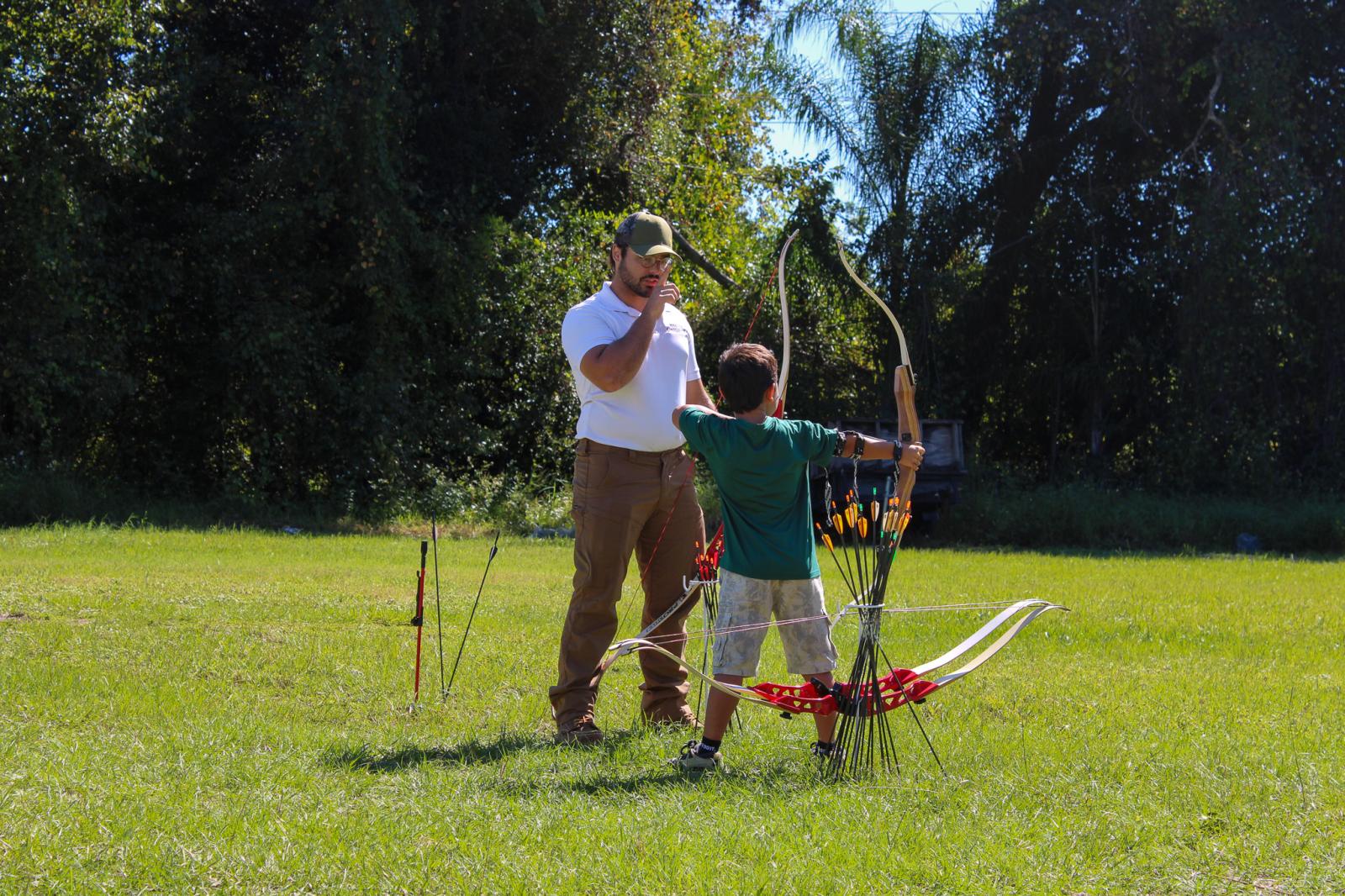
After the safety briefing, your child learns stance, grip, and how to hold the bow. An instructor will demonstrate proper posture, feet shoulder-width apart, shoulders relaxed, body angled slightly toward the target.
Next comes the draw: how to position fingers on the string, how to bring the bow back smoothly, and how to anchor the string at a consistent point (usually near the chin or jaw).
Only after stance and draw are reasonably solid does the instructor introduce the release, the moment when fingers open and the arrow flies. Kids often tense up during release, which ruins the shot.
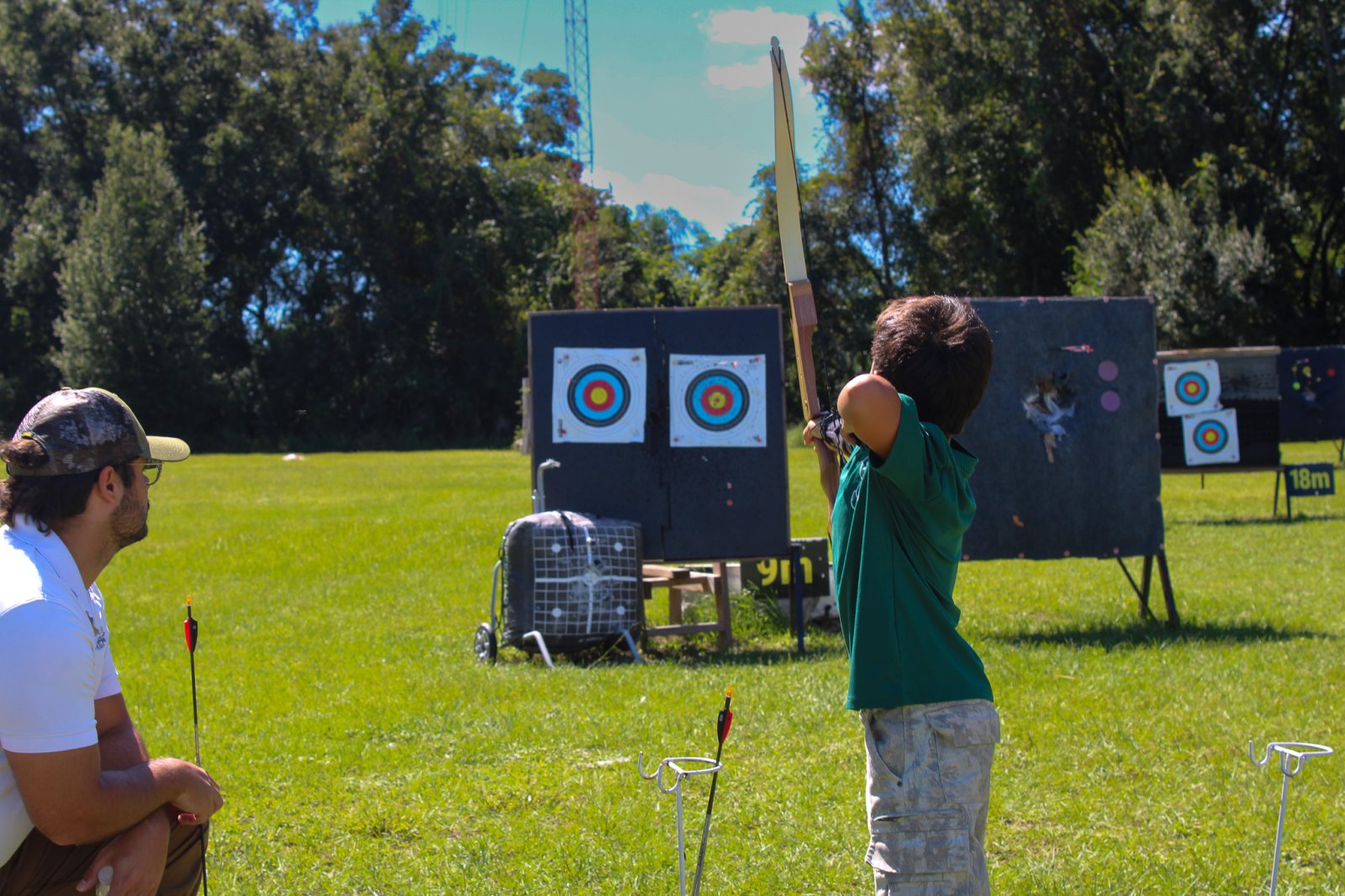
By the end of the first session, your child will have shot several arrows at a target from a short distance (often 10-15 yards for beginners). They probably won't shoot perfectly, nobody does on day one.
Archery Safety for Kids: What Parents Should Know
Safety in archery isn't negotiable, it's the foundation of every legitimate program. Instructors trained in youth archery lessons for kids take this seriously because one accident can end a child's participation or cause real harm.
The most critical safety element is range management. A well-run range keeps shooters and spectators in clearly defined zones. Arrows travel fast and far, so physical separation between shooting lines and observation areas is essential.
Supervision matters enormously. An instructor should never leave kids unattended on a range, even for a moment. Youth archery classes require constant monitoring, watching for unsafe bow handling, checking that kids are standing safely, ensuring arrows stay pointed downrange.
Equipment condition also affects safety. Bows should be regularly inspected for cracks or damage. Strings need replacement when they show wear. Arrows should be straight and undamaged. Broken or bent equipment fails unexpectedly and can cause injury.
Ask any facility about their safety protocols before enrolling:
- How many kids does one instructor supervise?
- How often is equipment inspected?
- What happens if a child breaks a safety rule?
- Are parents allowed to watch from the range?
- What first aid training do instructors have?
A program that answers these questions confidently and in detail takes safety seriously. A program that brushes off the questions is a red flag.
Parties & group events (1 hour) →
Archery Equipment for Beginners: What's Provided and What You Might Buy
Most archery ranges provide bows, arrows, and protective gear during beginner lessons. Buying personal equipment upfront is unnecessary and often wasteful, kids' draw lengths change as they grow, and personal bows become outgrown quickly.
During lessons, your child will use a youth bow matched to their size and strength. Central Florida Archery stocks equipment like the Galaxy Little Fox Take-Down Recurve Bow, which offers multiple draw weights and lengths to accommodate growing archers.

Ranges typically provide:
- A youth bow matched to your child's draw length and strength
- Arrows (usually practice arrows designed for beginners)
- An armguard (protects the inside of the bow arm from string snap)
- A finger tab or glove (protects fingers from string friction)
- A target or backstop for safe shooting
What you might eventually buy:
- Personal arrows (if your child commits to regular practice)
- A bow case for transport and storage
- A quiver to hold arrows during shooting
- Targets for backyard practice (if you have space)
If your child shows genuine interest after several lessons, consider investing in personal equipment. The King Arrows Youth Wood Arrows 6-Pack provides quality practice arrows at an accessible price point.

For a more complete starter setup, the Farmington 54" Bolt Recurve Bow Set includes everything needed to begin shooting: bow, arrows, case, armguard, string, finger tab, and a target face.
Don't rush equipment purchases. Many kids lose interest after a few weeks, and personal gear becomes expensive clutter. Let your child prove commitment through consistent attendance before you invest significantly.
Class Schedules, Pricing, and How to Register
Archery lessons for kids vary in format and cost depending on the program. Some facilities offer drop-in sessions, while others require multi-week commitments. Central Florida Archery provides flexible options to fit different family schedules and budgets.
For group introductory sessions, expect to pay per person per session. Youth archery classes typically run per hour, though pricing varies by location and instructor experience. Some programs offer discounts for multi-week packages or sibling registrations.
Beyond standard lessons, Central Florida Archery also offers Parties & Group Events (1 hour) for $40, making archery an option for birthday celebrations or team-building activities. This format works well for kids who want to experience archery with friends before committing to regular lessons.
To register:
- Contact the facility directly or check their website for current schedules
- Confirm age eligibility and any prerequisite requirements
- Ask about trial sessions or introductory rates
- Understand cancellation policies before paying
- Arrive early for your first session to complete paperwork and safety orientation
Most programs ask parents to complete a waiver acknowledging the inherent risks of archery. This is standard practice and protects both the facility and your family. Read it carefully, it's not a sign of danger, just responsible liability management.
How to Prepare Your Child and Keep Them Engaged
The days before your child's first archery lesson, talk about what to expect. Explain that archery requires focus and patience, that they'll learn step-by-step, and that hitting the target takes practice.
Dress your child in comfortable clothing that allows free arm movement. Avoid loose sleeves or dangling jewelry that could catch on the bowstring. Closed-toe shoes are essential for safety on the range. Most facilities don't require special athletic wear, just practical, safe clothing.
On lesson day, arrive a few minutes early. This gives your child time to settle into the environment and ask questions before instruction begins. Parents who rush in at the last minute create stress that carries into the lesson.
After the first lesson, ask your child open-ended questions: What was the hardest part? What felt good? What do you want to practice next time? These conversations help you gauge genuine interest versus polite enthusiasm.
To maintain engagement:
- Attend lessons consistently, archery progress requires repetition
- Celebrate small improvements (hitting the target, better grouping, smoother release)
- Avoid comparing your child's progress to other kids in the class
- Consider occasional practice between lessons if your child expresses interest
- Let the instructor guide advancement, don't push your child to move to longer distances before they're ready
Many kids who stick with archery lessons for kids eventually join competitive programs or continue shooting recreationally into adulthood.
Archery offers kids something increasingly rare: a structured activity that demands focus, builds real skill, and creates genuine accomplishment. Whether your child shoots once for a birthday party or joins our JOAD competitive team, we're here to guide them every step of the way. PLAN A VISIT and let your child discover what archery can offer.
Frequently Asked Questions
What age should kids start archery lessons?
Most children can begin archery lessons around age 6 or 7, though readiness depends on maturity and ability to follow safety instructions. Younger children may struggle with bow draw weight and focus, while older kids typically progress faster. Our instructors assess each child individually to ensure they're developmentally ready for the fundamentals of stance, aim, and release.
How much do kids archery classes cost?
Pricing varies by program type and length. Group introductory sessions and ongoing classes offer different rates depending on frequency and duration. For example, parties and group events run $40 for a one-hour session. Individual lesson packages and seasonal memberships are available to fit different budgets and commitment levels. Contact us directly for current pricing on regular kids' archery classes and multi-week programs, as rates may vary by age group and skill level.
What equipment does my child need for their first archery lesson?
Most equipment is provided during introductory lessons, including a bow suited to your child's size and draw weight, arrows, arm guard, and finger tab. For beginners purchasing their own gear, the Galaxy Little Fox Take-Down Recurve Bow ($149.98) is an excellent entry-level option with adjustable draw weights, and King Arrows Youth Wood Arrows ($22.99 for a 6-pack) are reliable for young archers. Our instructors will recommend what's best for your child's age and strength during the first session.
How long does a beginner archery lesson for kids last?
Introductory lessons and group sessions typically last one hour, giving instructors time to cover safety, basic stance and setup, and supervised target practice. Ongoing weekly classes may follow similar timeframes to keep young archers engaged without fatigue. The exact duration depends on the program format—private lessons, group classes, and parties each have their own structure. Ask about session length when registering so you can plan transportation and your child's schedule accordingly.