

Table of Contents
- Why Adult Beginners Are the Fastest-Growing Group in Archery
- What to Expect at Your First Archery Lesson
- Archery Safety for Beginners: Range Rules You Need to Know
- How Much Do Archery Lessons Cost?
- Beginner Archery Equipment: What You Need (and What You Don't)
- How to Find and Evaluate a Certified Archery Instructor
- Your Realistic Learning Timeline: Progress You Can Expect
- Conclusion: Your Next Step Toward the Range
- Frequently Asked Questions
Last Updated: October 12, 2026
Why Adult Beginners Are the Fastest-Growing Group in Archery
Walk into any range on a Saturday morning and you will notice something: the line at the shooting lane is no longer dominated by kids in matching team jerseys. According to USA Archery, the sport's national governing body, adult introductory programs have expanded steadily as more people look for screen-free hobbies that build focus and confidence.
At Central Florida Archery, we see this firsthand. Our 20-target outdoor range supports distances up to 70 meters, and a growing share of our students are adults who have never shot an arrow. They come for different reasons: a date night, a stress outlet, a family activity, or a competitive itch they want to scratch.
Here is the good news. Archery is a lifelong sport, and adults often progress faster than juniors because they can follow instruction and understand their own bodies.
What to Expect at Your First Archery Lesson
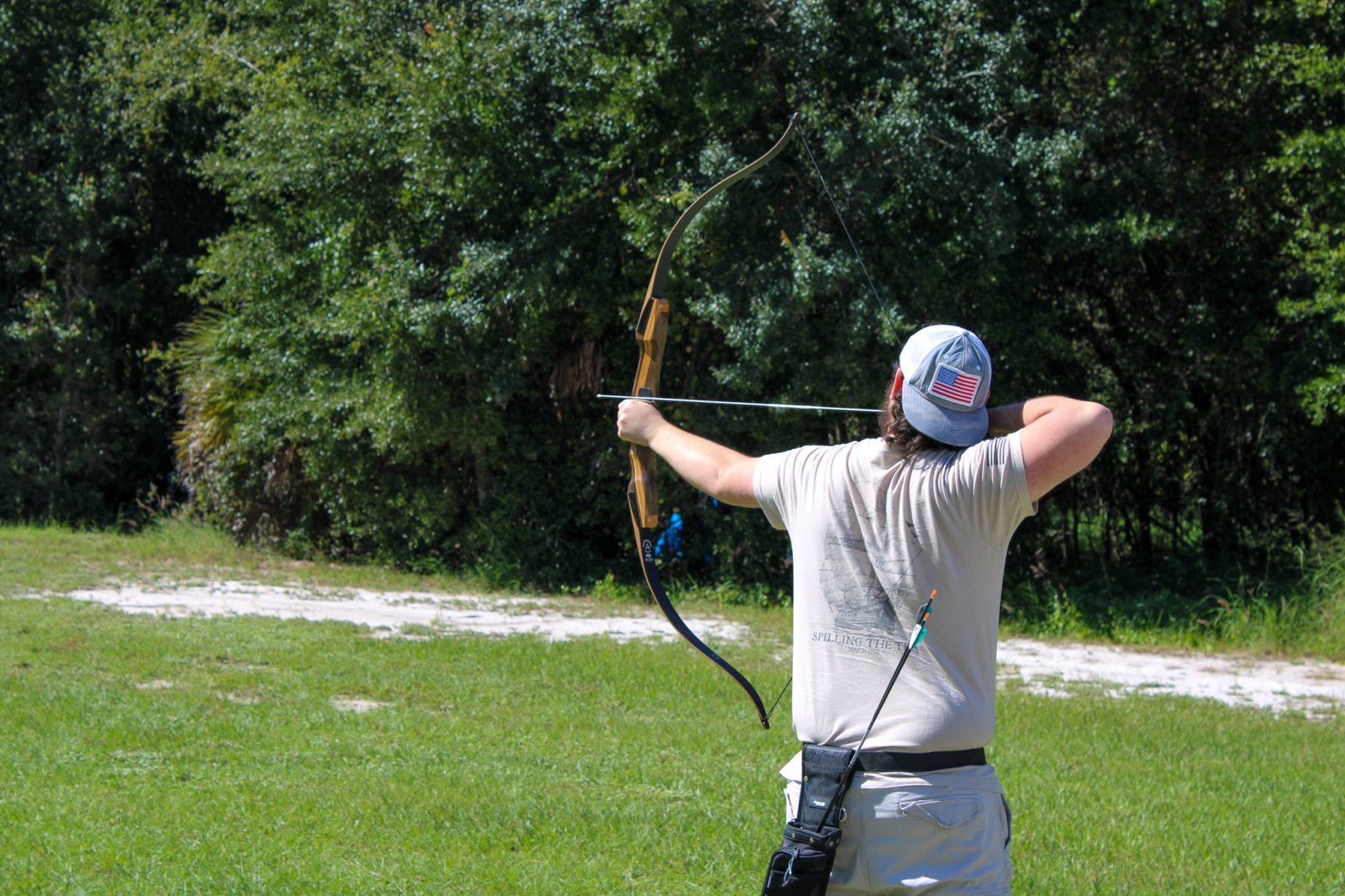
Most first lessons follow a predictable rhythm: safety briefing, equipment introduction, basic shooting form, and supervised practice. You will not be handed a bow and left alone. A good instructor walks you through every step before you nock your first arrow.
A Step-by-Step Walkthrough of Your First Session
- Range safety briefing - You learn the whistle commands, the shooting line, and where to stand when others are shooting.
- Equipment fitting - Your instructor checks your draw length and selects a bow you can handle comfortably.
- Stance and grip - You practice standing square to the target and holding the bow without gripping it too tightly.
- Drawing and anchoring - You learn to pull the string to a consistent point near your face or jaw.
- Release and follow-through - You let the arrow fly and hold your position after the shot.
- Scoring and feedback - You shoot a few ends, then review where arrows landed and why.
What to Bring and What to Wear
You do not need to own anything to start. Most ranges, including ours, provide rental bows, arrows, and safety gear for your first visit.
Wear fitted clothing that will not catch on the bowstring. Avoid loose sleeves, dangling jewelry, and open-toed shoes. Bring a water bottle and a willingness to listen. That is it.
Archery Safety for Beginners: Range Rules You Need to Know
Archery safety for beginners comes down to one principle: never point a bow at anything you are not willing to destroy. Every other rule flows from that.
The core range rules you will hear at any reputable facility:
- Keep your bow pointed downrange at all times
- Only nock an arrow when the range is clear and the signal is given
- Never walk forward to retrieve arrows until everyone has stopped shooting
- Stay behind the shooting line unless told otherwise
- Inspect your arrows and bow for damage before each session
A common mistake is treating range rules as optional formalities. They exist because a dry-fired bow can shatter, and a stray arrow can travel farther than you expect. Follow the commands without exception.
How Much Do Archery Lessons Cost?
Most adults want a number before they commit, and the honest answer is that archery lessons fall into a few predictable price bands. Your local market, range type, and session length will move them. Treat these as planning figures, not quotes.
What the Fee Usually Includes (and What It Doesn't)
A well-priced beginner lesson bundles four things: instructor time, a fitted rental bow, arrows, and safety gear (arm guard, finger protection). Ask specifically about each one, because the gaps are where surprise costs hide.
Common add-ons that are not always included:
- Target or lane fee at ranges that charge range time separately from instruction
- Arrow breakage fees if you Robin Hood an arrow or lose one past the backstop
- Equipment rental beyond the first session if you keep shooting after the class
- Membership or insurance surcharges some clubs require before you can shoot
Group vs. Private: Which Fits Your Budget?
Format |
Typical Cost |
Best For |
Trade-off |
|---|---|---|---|
Drop-in group intro |
$25-$50 |
Testing the sport, couples, friends |
Less individual correction |
$50-$100 |
Fixing form, fast progress |
Highest per-hour cost |
|
Semi-private |
$40-$75 each |
Two people learning together |
Shared instructor attention |
Multi-week course |
$120-$300 total |
Structured beginners |
Requires a weekly commitment |
If you have never drawn a bow, a single drop-in group intro is a low-risk way to find out whether you enjoy it. If you have already been shooting and want to break a bad habit, private time can help you progress faster than a group class will.
The Real Cost of Getting Started
Lessons are only part of the picture. Budget for these if you plan to keep shooting:
The smartest sequence is to rent for your first two or three lessons, confirm you want to continue, then buy a bow that a shop fits to you in person. Buying before your first lesson usually means buying the wrong draw weight.
Beginner Archery Equipment: What You Need (and What You Don't)
For your first lesson, the correct answer is almost always: nothing. A reputable range provides a fitted rental bow, arrows, an arm guard, and finger protection. Your job is to show up in fitted clothing and learn form on equipment that already fits you.
That said, adults ask the same three questions before every first lesson, so here is the practical version.
What You Actually Use in a First Lesson
Most beginner programs start adults on one of two setups:
- A lightweight recurve (often a take-down model) at roughly 15-25 pounds of draw weight. Recurves force you to build form without a mechanical crutch, which is why many instructors prefer them for teaching.
- A Genesis-style compound at 10-20 pounds with zero let-off. These are popular for families because one bow adjusts across a wide range of draw lengths and weights.
Either is fine. What matters is that the bow is fitted to you, not that it is a particular brand.

Draw Length and Draw Weight: The Two Numbers That Matter
These two measurements decide whether a bow feels comfortable or miserable, and both are easy to get wrong when you buy online.
- Draw length is how far you pull the string at full anchor. A bow that is too short or too long forces you out of proper alignment and creates bad habits that take months to unlearn.
- Draw weight is how many pounds you are pulling at full draw. Beginners should start light, often 15-25 pounds for recurve, 10-20 for compound. You can always move up. Starting too heavy causes you to collapse your form, shake, and develop a flinch.
A common pattern is that adults overestimate how much draw weight they can handle because they are physically strong. Archery uses small stabilizer muscles that strength training does not prepare, so start lighter than you think you need.
When It Makes Sense to Buy Your Own Bow
Buy after your first two or three lessons, not before. By then you will know whether you enjoy the sport, and you will have a feel for what draw weight is actually comfortable.
When you do buy, buy from a shop that will measure your draw length and set the bow up for you in person. A bow that fits will make you a better shooter faster than any upgrade will.
What You Do Not Need Yet
Skip these until an instructor tells you otherwise:
- Release aid, only relevant for compound bows, and not needed while you are learning form
- Sight, adds a variable before your basic shot is repeatable
- Stabilizer, a tuning tool, not a beginner necessity
- Custom string, a wear item, not a starting purchase
- Quiver, most ranges loan one, and you will not need your own until you shoot outside a class
How to Find and Evaluate a Certified Archery Instructor
The best way to judge an instructor is to ask two questions: are you certified, and who certified you? Look for USA Archery certification or an equivalent recognized program. Certification means the instructor has passed a written and practical evaluation and understands how to teach safely.
Beyond credentials, watch how they teach. A strong instructor explains why a correction matters, not just what to change. They adjust their approach for your body and experience level. They keep safety front and center without making the session feel rigid.
Ask about class size, instructor-to-student ratio, and whether equipment is included. If a facility cannot answer those questions clearly, keep looking.
Your Realistic Learning Timeline: Progress You Can Expect
Progress in archery is steady, not instant. Here is a realistic timeline for an adult beginner attending lessons once a week:
- Sessions 1-2: Learn safety, stance, and basic form. Arrows may land anywhere on the target.
- Sessions 3-6: Consistency improves. You start grouping arrows closer together.
- Sessions 7-12: You can score consistently and begin adjusting for distance.
- Beyond 12 sessions: You are ready to consider your own bow, a sight, and more advanced coaching.
The biggest predictor of progress is not talent. It is how often you shoot. Practicing between lessons, even briefly, accelerates everything.
Conclusion: Your Next Step Toward the Range
Starting a new sport as an adult takes nerve. The good news is that archery is one of the most welcoming entry points you will find, and the skills you build carry over into focus, patience, and confidence. At Central Florida Archery, our certified instructors guide adult beginners through every step, from your first safety briefing to your first tight group. Our 20-target outdoor range, pro-shop for equipment tuning, and USA Archery sanctioned JOAD team give you room to grow at your own pace. Plan a visit and see what a single lesson can do.
Frequently Asked Questions
Can you start archery as an adult?
Yes. Archery is a lifelong sport with no age limit for starting, and many adults pick up a bow for the first time in their 30s, 40s, or later. Beginner classes are designed for people with zero experience, so you will not be the only newcomer. Adult beginners often progress quickly because they follow instruction well and practice deliberately. Most ranges offer beginner archery classes specifically for adults, and certified instructors can adapt lessons to your fitness level and goals.
How expensive are archery lessons?
Archery lessons cost varies by format. Group beginner classes are an affordable option, while private lessons cost more per session but give you focused attention. Many ranges offer introductory packages that include equipment rental, so you can try the sport before buying anything. When comparing prices, factor in whether the fee covers bow rental, arrows, and range time.
Do beginner archery lessons provide a bow?
Most beginner archery lessons provide bows, arrows, and safety gear like arm guards. At Central Florida Archery, we supply equipment for introductory sessions so you can learn proper form before investing in your own bow. If you decide to buy, the Genesis Bow Set is a popular choice because it fits anyone with a draw length of 15-30 inches and can be adjusted from 10-20 pounds, making it easy to share or grow with. The Galaxy Aspire 66 is another affordable introductory recurve at $129.99.
How many archery lessons does a beginner need?
Most adult beginners see consistent improvement after 4-6 lessons. The first session covers range safety, proper stance, and basic shooting technique. By the third or fourth lesson, you will likely be scoring consistently and understanding how to adjust your aim. After that, progress depends on how often you practice. Many students take a group class series, then move to open shooting sessions with occasional private coaching to refine specific skills.